



Beauty Wisdom
Beauty Wisdom
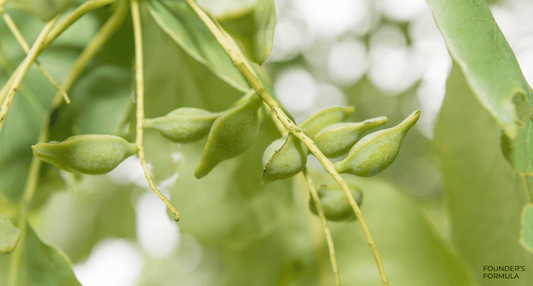
The power of Kakadu Plum in skincare
When it comes to skincare ingredients, Australia has gifted the world some incredible botanical wonders. One of the most exciting? Kakadu Plum. This native fruit, often hailed as a superfood, has taken the beauty industry by storm for its extraordinary benefits for the skin.
But what makes it so special? Let’s explore the science, examine the benefits of Kakadu Plum skincare and discover why it deserves a place in your routine.
What is Kakadu Plum?
The Kakadu Plum (Terminalia ferdinandiana) is a small, green fruit native to northern Australia. It’s been used for centuries by Indigenous communities for its nutritional and medicinal properties. Dubbed the “world’s richest source of vitamin C,” Kakadu Plum packs a powerful antioxidant punch.
Dr Annie Holden, anthropologist and the founder of Founder's Formula, explains, “Kakadu Plum is a true treasure of the Australian landscape. Its high vitamin C content and unique phytonutrients make it an exceptional ingredient for skincare.”
‘Gloss value’ clinical studies of Kakadu Plum
Clinical trials have shown that Kakadu Plum extract significantly enhances skin luminosity, as measured by changes in ‘gloss value’. Over a 30-day period, 20 volunteers with an average age of 37 experienced an average improvement of 17% in their skin’s gloss value.
The most notable results were observed in one participant, who achieved a 21% increase in luminosity within 15 days and an impressive 30% improvement after 30 days. These findings highlight the potential of Kakadu plum to deliver visible radiance and a healthier-looking complexion.
What are the benefits of Kakadu Plum for your skin?
1. It’s packed with antioxidants
Vitamin C is a skincare superstar and Kakadu Plum has it in spades—reportedly up to 100 times more than oranges! Antioxidants help combat free radicals, which are unstable molecules that can damage skin cells and accelerate ageing. By neutralising these harmful molecules, Kakadu Plum helps maintain a youthful, radiant complexion.
2. It can brighten and even skin tone
Hyperpigmentation and dullness are common skin concerns. Thanks to its high vitamin C content, Kakadu Plum may help fade dark spots and even out skin tone. It helps promote collagen production, which is vital for maintaining skin elasticity and helping to reduce the appearance of fine lines.
Dr Annie Holden adds: “Collagen is the building block of healthy skin. By supporting collagen synthesis, Kakadu Plum not only brightens but also strengthens the skin’s structure.”
3. It’s deeply hydrating
Kakadu Plum isn’t just about antioxidants. It’s also rich in polysaccharides, which help lock in moisture and keep your skin hydrated, making it an ideal ingredient for dry or dehydrated skin types.
4. It can help soothe and calm irritation
If you have sensitive or inflamed skin, you’ll love Kakadu Plum. Its anti-inflammatory properties can help reduce puffiness, redness and irritation, helping your skin feel calm and refreshed.
How to use Kakadu Plum in your skincare routine
One of the easiest ways to incorporate Kakadu Plum into your routine is through a high-quality serum. Our Wild-Harvested Australian Kakadu Plum Vitamin C Serum is a standout option. It combines the benefits of Kakadu Plum with other nourishing botanicals, delivering a potent dose of antioxidants and hydration to your skin.
Dr Annie Holden recommends applying a Kakadu Plum serum after cleansing: “Using a Kakadu Plum serum in the morning can help protect your skin from environmental stressors throughout the day. Just follow it up with sunscreen for optimal results.”
Other Kakadu Plum cream products include our popular SLUG Plant-Based Alternative to Petroleum Jelly, perfect for keeping in moisture and adding an extra layer of antioxidant protection.
Is Kakadu Plum suitable for all skin types?
Kakadu Plum is a versatile ingredient that’s gentle enough for most sensitive skin yet effective enough for those with specific concerns like ageing, dullness or hyperpigmentation. If you’re new to antioxidant skincare, starting with a Kakadu Plum serum or cream is a great choice. As always, we recommend chatting with your healthcare professional for advice specific to your skin type.
What should you look for in a Kakadu Plum product?
Not all Kakadu Plum products are created equal. Here are a few tips to ensure you’re getting the best:
Check the ingredient list: Look for products where Kakadu Plum is a key ingredient, ideally listed towards the top.
Opt for wild-harvested sources: These tend to have higher nutrient levels as they grow in their natural environment.
Choose reputable brands: Founders Formula is a trusted name in Australian skincare, known for its commitment to high-quality, sustainably sourced ingredients.
Ready to transform your skin?
Kakadu Plum is more than just a trendy ingredient; it’s a game-changer for skincare. With its unparalleled antioxidant content, hydrating properties and skin-brightening benefits, it’s no wonder this Australian superfruit is gaining global recognition. Why not experience the benefits for yourself?
Explore Founders Formula’s Kakadu Plum range and give your skin the love it deserves. Keen to see more antioxidant skincare? Check out the power of the Tasmanian Mountain Pepper Berry featured in our CALM range.
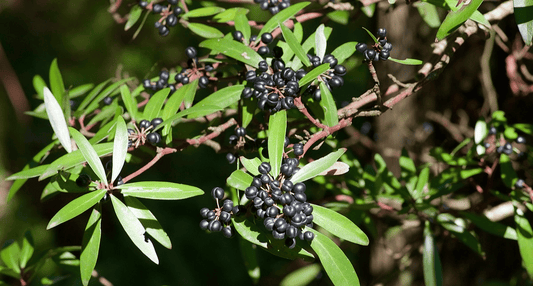
Tasmanian Mountain Pepper Berry: Nature’s Skincare Antioxidant
If you have sensitive skin that flares up easily, we have just the ingredients to help. Tasmanian Mountain Pepper Berries have been used for centuries to soothe skin irritation and provide antioxidant skincare solutions. Today, clinical research supports this ancient wisdom and highlights their ability to reduce redness and inflammation.
So how can you add Tasmanian Pepper Berry benefits to your daily skincare regime?
In this article, we’ll take you through the numerous Mountain Pepper Berry skin benefits and uses. We’ll explore its unique properties, look into the science behind its effectiveness and explain how incorporating our clinically formulated CALM serum, infused Mountain Pepper Berry, into your skincare routine can enhance your skin's overall wellbeing.
What is Mountain Pepper Berry?
The Mountain Pepper Berry (Tasmannia lanceolata) is harvested from Mountain Pepper Trees, native to the southeastern region of Tasmania. These trees are also found in some areas of Victoria and New South Wales. Indigenous peoples have traditionally used this remarkable berry for its healing properties and as a culinary spice. The berries and leaves are often dried and ground into a coarse powder to season meats, fish and other dishes. The powder imparts a spicy, peppery flavour with herbal and floral notes. Mountain Pepper Berry is also valued for its medicinal properties, treating digestive issues and skin conditions. Indigenous communities use it in smoking ceremonies for spiritual cleansing.The leaves of the Tasmanian Mountain Pepper tree are also harvested for cooking, cosmetics, and flavour extracts. This resilient species thrives in harsh conditions and provides numerous natural health benefits.
How is the Tasmanian Mountain Pepper Berry so effective?
The Mountain Pepper Berry owes its skin-loving superpowers to a unique blend of active ingredients that work together to nourish and protect your skin. These benefits include:
Polygodial: An anti-inflammatory agent that reduces skin discomfort and has anti-allergic and antimicrobial properties.
Anthocyanins (Cyanidin 3-rutinoside, Cyanidin 3-glucoside, Rutin): Powerful antioxidants that protect cells from oxidative damage. Rutin also strengthens capillaries and reduces dark circles.
Magnesium and Zinc: Essential minerals that stimulate cell regeneration, increase energy production and act as anti-stress agents. Zinc helps repair cell damage, decrease rash, and alleviate acne inflammation.
How do these active ingredients help improve your skin?
These active ingredients sound scientific, but what impact do they have on our skin? Some of the core Mountain Pepper Berry skin benefits you’ll notice are:
Reduced skin irritation: By soothing sensitive skin and reducing redness, Mountain Pepper Berry helps you feel more comfortable and confident in your skin. No more worrying about sudden flare-ups or visible irritation—just a calm, even complexion that feels as good as it looks.
Antioxidant power: This remarkable berry has 10 times the antioxidant power of blueberries, helping protect your skin from oxidative damage. You'll feel assured knowing your skin is shielded from environmental stressors, helping you maintain a youthful and radiant appearance over time.
Anti-inflammatory properties: The anti-inflammatory properties of Mountain Pepper Berry help to reduce allergic skin conditions like atopic dermatitis. This results in less discomfort and fewer flare-ups, allowing you to enjoy clear, healthy skin without the stress of managing persistent skin issues and damage.
The science behind the results
Studies have shown the effectiveness of Tasmanian Mountain Pepper Berries in reducing inflammation and soothing sensitive skin. Research indicates that the berry interacts with the TRPV1 channel, a pathway that’s often overactive in individuals with sensitive skin, thus leading to chronic inflammation. By inhibiting TRPV1 channel activity, the Mountain Pepper Berry helps reduce micro-inflammation and soothe skin irritation.
Clinical trials have demonstrated significant results:
Immediate itching reduction: 20 male volunteers with sensitive/reactive skin participated in testing the effects of Tasmanian Pepper Berries on skin irritation. The stinging reaction was induced using a capsaicin solution, and volunteers reported the sensation on a clinical scale. The study found that Tasmanian Mountain Pepper Berry significantly reduced itching sensations by 79% after just five minutes.
Anti-inflammatory efficacy: Another trial compared the anti-inflammatory efficacy of Mountain Pepper Berry to the drug dexamethasone (DMS). The results showed that Mountain Pepper Berry inhibited the production of IL-8, an inflammation marker, more effectively than DMS, highlighting its ability to reduce early-stage skin inflammation.
Dr Annie Holden, anthropologist and founder of Founder's Formula, elaborates on the impressive outcomes: "Tasmanian Mountain Pepper Berry has proven to be exceptionally effective for those with sensitive skin. Clinical trials have shown not only an immediate reduction in itching by nearly 79%, but also a superior ability to inhibit inflammation compared to traditional treatments like dexamethasone. This underscores its potential to provide both rapid and lasting relief, making it a powerful and natural option for managing skin sensitivities."
Why we use Mountain Berry Pepper in our CALM range
Founder's Formula CALM Serum is made with Certified Organic Tasmanian Mountain Pepper Berry to reduce skin irritability and the appearance of redness instantly. By soothing the skin, CALM helps prevent future spots and pigmentation before they begin.
Our formula effectively soothes and shields the skin during times of elevated cortisol levels, such as prolonged exposure to air-conditioning, emotional stress or long and hectic days. To maximise its benefits, we suggest applying it before signs of irritation, making it an excellent primer for your makeup – especially for special occasions.
“CALM is not a product for everybody, but for those of us with sensitive skin or whose skin becomes scratchy in extended periods of air conditioning, it's a great support for calm, clear, hydrated skin,” advises Dr Annie Holden.
Are you ready for a little CALM in your life?
Tasmanian Mountain Pepper Berry stands out as a potent, natural solution for sensitive skin. Its unique properties not only soothe irritation and reduce redness but also provide powerful antioxidant protection. By incorporating this remarkable ingredient into our CALM serum, we’ve enhanced its benefits to offer you a product that can transform your skincare routine.
Explore the CALM range and experience the soothing benefits of Mountain Pepper Berry for yourself. IMG CREDIT: DavidFrancis34 from Australia, CC BY-SA 2.0, via Wikimedia Commons

Why Some Skin Care Companies use Bad Ingredients
I regularly find myself explaining to friends and customers that not all skin care ingredients are good for your skin. And the response is often 'well, if ingredients are not good for skin, then why would skin care companies use them?' Well, let me tell you why:
1. Fragrance. Human beings use our sense of smell as a first response to test the safety and/or desirability of anything - living or not living. I see this all the time when I give a friend one of my products, the first thing they do is smell it. But fragrance is a big irritant and risks sensitising skin (ie creating skin that is suddenly super sensitive and turns red or itchy easily) with life-long consequences for skin matrix health. So why then would any skin care company use fragrance? Simple - consumers assume that if it smells good it must be good for you, and the skin care companies capitalise on this by adding synthetic fragrances or fragrant essential oils to improve the smell and therefore the desirability of a product.
2. Short term gains. My heart goes out to consumers who struggle to find potent products that really deliver. However, consumers tend to be impressed by fast results and skin care companies know that if they can't deliver on a quick result then consumers will assume that the product is not good. Enter front of stage Alpha Hydroxy Acids (AHA). Providing the skin barrier is not already compromised, AHAs will deliver quick results by giving an instant glow by stripping the top layer of cells off the skin and revealing newer, younger cells below. Instant gratification. Long term high risk damage. Beauty therapists are reporting an increasing number of clients showing up with sensitised skin because of the over-use of AHAs. Skin care companies interested more in quick sales and less interested in the long-term health of their customers' skins put too much AHAs in too many of their formulas.
3. Relying on supplier clinical studies. Formulators buy their ingredients from a range of suppliers, some of whom conduct studies and provide these to the formulators. Rarely do the formulators retest. But sometimes suppliers will talk about the good things about their ingredients, and provide studies to prove these good things, but don't mention the bad things. For example, we initially looked at using a particular ingredient in one of our products because the clinical studies from the supplier looked impressive. It was only once we conducted our own in-house studies that we discovered that the ingredient stings eyes. We immediately replaced it with a better alternative - yet I see this ingredient commonly in many big name skin care company ingredients lists.
4. Catering to the majority. The majority of people do not have sensitive skin. It is estimated that between 10 and 15% of people do have sensitive skin from time to time. The bigger companies do not try to cater to this minority - for a range of reasons that I will explain in another blog one day. So, providing that tests show that the majority of people can tolerate an ingredient, the big companies (and some small ones) are happy to include the ingredient regardless of the risks.
5. It's too late. Skin care is a dynamic field, new ingredients are constantly being discovered and old ones improved. New issues are increasingly identified with old ingredients. But companies print their boxes and bottles in the hundreds of thousands at a time. Discovering a problem with an ingredient once the boxes are printed, the marketing materials printed and distributed, the sales team briefed etc is too late. The runway from changing out a problem ingredient for a better one is measured in years, not weeks.
I could be mean and say that there is a sixth reason and that is plain old laziness but I won't. In my experience the vast majority of formulators work hard and are professional in all that they do. But they are not the decision-makers. If formulators ruled the world, and not investors, marketers and sales directors, skin care formulations would likely look very different!
Dr Annie Holden, Sunshine Coast, Australia.

DNA Repair - is that a real thing?
You will see that our Purslane and Commelina Gentle Balancing Toner includes a claim that Purslane promotes the pro-aging enzyme Telomerase which protects the cells' DNA repair function.
Really?
So how, exactly does it do this?
Telomeres are little caps at the very ends of chromosomes that protect the internal areas of chromosomes. Every cell in our bodies is constantly renewed every seven to ten years, some cells more frequently. So why then are we not exactly the same every seven to ten years?
The problem is that with every replication of our DNA, some fragments of the genes that make up the chromosomes are lost. This loss of genetic materials wears down the ends of the chromosomes and leads to a shortening of the chromosomes over time.
Telomeres are little caps at the ends of the chromosomes that protect the internal areas and to an extent prevent the shortening of the chromosome.
Telomere shortening has been linked to the aging of cells. The progressive loss of telomeres may explain why cells can only divide a certain number of times. If the chromosomes become too short, their ability to divide is compromised.
The good news is that some cells in our body have the ability to reverse telomere shortening by expressing Telomerase, an enzyme that extends the telomeres.
Purslane contains this enzyme, Telomerase. This is why we say that the Purslane and Commelina Gentle Balancing Toner contains an ingredient that works at the DNA level.

How to Apply Serums and Oils - The 7 - Skin Method
The Korean 7- Skin Method is a great approach to using Founder's Formula serums and oils. It is the ideal method for giving skin the best chance to soak up and benefit from the multiple phyto-actives found in our nutrient-rich Australian Botanicals.
Here's how it works:
Founder's Formula 7- Skin Method
1. In the mornings, do not cleanse, simply wipe face and neck with a re-usable cotton or bamboo pad soaked in Purslane and Commelina Gentle Balancing Toner.
In the evenings, massage face and neck with Macadamia Omega 7 Cleansing Oil and rinse away with water. Pat dry excess water. Using a re-usable cotton pad, apply Purslane and Commelina Gentle Balancing Toner.
2. If you are preparing for a big day or a big event, or if your face is feeling stressed or irritated, start with CALM Tasmanian Mountain Pepper Berry Serum as your first serum layer. Drop 1 or 2 drops in the palm of your hand, press hands gently together and press flat palms to face.
3. Allow to soak in (clean your teeth, lay out your clothes, light a candle, sip tea). The time it takes will depend largely on how dehydrated your skin is at the time. Very dehydrated skin will soak up serums instantly.
4. For mornings, after 1 or 2 minutes, apply Wild-Harvested Kakadu Plum Vitamin C Serum, especially if skin is pigmented or sun-damaged but also to prevent pigmentation. Repeat with a second serum layer as recommended by your facialist.
At night after cleansing and toning, apply Phyto-A+ Australian Native Tobacco. Wait a few moments for it to absorb. Then apply one or two drops of Australian Botanicals Pro-Aging Treatment Concentrate Serum with B3, B5 and Hyaluronic Acid.
Again, allow a little time for each serum to fully absorb before applying the next. Layer as often (or as little) as needed to reach saturation. If your skin is already well hydrated, one or two layers may be fine. If skin is dry, use more layers, allowing a minute or two between layers.
If skin around eyes is puffy, or for dark circles, apply Native River Mint Cooling Eye Serum around the eye area, include on the lids if puffy, carefully avoiding the eyes themselves, morning and night.
5. After layering serums, apply Wild Rosella Hydrating Moisturiser in the morning and Snake Vine Super Anti-Oxidant Pro-Aging Moisturiser to complete the occlusion to lock in benefits and prevent the freshly hydrated skin from 'de' hydrating.
6. Apply 1 drop of Australian Botanicals Nourishing Facial Oils for additional skin health benefits, including oil-based Vitamin E, and to complete the occlusion. Oils can penetrate moisturisers but moisturisers are less efficient at penetrating oils. Remember the key with oils, as with all Founder's Formula products, is that a little goes a long way.
7. For day time, finish with an 50+ SPF - remember it needs to be applied at least 20 minutes before sun exposure in order to give it time to form a protective barrier.
The 7- Skin Method is a Korean technique for applying serums and toners. In Korean, 'toner' translates as a 'skin', so the '7- Skin Method' translates literally as the '7- Toner Method'. The 7- Skin Method is a way to apply multiple layers of hydrating toners in 7 thin layers to thoroughly hydrate the skin. Using this method, the skin is deeply hydrated, while the multiple layers build to become an occlusive, like a moisturiser. In the original 7 Skin Method a moisturiser is not used.
All Founder's Formula serums are hydrating serums. All are created in a base of organic aloe vera and with added natural hyaluronic acid, which is soothing and hydrating. Our Pro-Aging Serums have multiple hydrating phyto-actives including native seaweed (Tasmanian kelp) with its exceptional moisturisation properties, Emu Apple, a rich hydrator, Banksia, rich in moisturising glycosides that repair and restore skin health, and Kangaroo Flower, rich in natural hydrating fatty acids.
We include moisturisers and oils in the 7- Skin Method because there are beneficial phyto-actives that are only available in nature as oils. They do not dissolve into water and so are not available unless oils are included in a skin care routine. Serums (sometimes referred to as Essences), followed by oils, offer the full range of skin benefits that nature has to offer.
Taking the time to love our skin is taking the time to love. Korean women completely understand the meditative power of ritual and the magic of using skin care mindfully and lovingly to create awareness and inner stillness. Applying skin care with Presence is a way of consciously bringing the power of now into our day!
But, of course, many of us live busy lives and sometimes the ritual and the down-time are just not an option for every woman every day. So if time is not your friend today, remember, skin can multi-task and it is completely fine to mix serums and apply in a single step. Allow to absorb and follow with a little Australian Botanicals Nourishing Facial Oils mixed in to your preferred moisturiser - we can call it the 'Busy Woman's 2 - Skin Method'.
Self-love in any language is doing what is needed in the moment.
Author note: Dr Annie Holden is an anthropologist and the founder of Founder's Formula. Annie lives on the Sunshine Coast in Queensland, Australia.

Yes. Men's Skin Really is Different to Women's
Have you ever wondered if marketing skin care to men is really only all about the packaging? I mean, most men start out by using their partner's or sister's skin care anyway. So are marketers really just re-packaging the exact same women's products to make them more appealing to men - or are men's skin care products truly different?
Let's start by considering the ways in which men's skin is actually quite different to women's:
Wrinkles and Fine Lines.
You may be surprised to learn that men actually develop wrinkles earlier in life and with a greater severity than do women - regardless of whether they use an SPF. While women’s wrinkles increase sharply from around 40+ years of age, men tend to have a clinical onset of wrinkles from around 25 years of age. This is not due to their being in the sun more, or some other environmental factor, but it is due to the quite different composition of male skin – for example:
Collagen
Women have a much higher volume of collagen fibres in our skin, which gives us more elasticity during our younger years. But before we become too complacent - it is also the case that our collagen fibres decrease rapidly with age. Men, on the other hand, have a much lower collagen density and fibre volume in their dermis but theirs decreases more steadily over time. Both men and women, however, can benefit from Founder's Formula award-winning Phyto-A+ Australian Native Tobacco Serum. This serum has been clinically proven to stimulate collagen production at four times the rate of Vitamin A and works equally on women and on men.
Skin Extensibility
Women tend to have a much higher skin extensibility and distensibility (ability to swell and expand) compared to guys, but in turn, male skin has a better ability for recovery after episodes of swelling or skin expansion.
Subcutaneous Hydration
Subcutaneous hydration (or the amount of water held underneath the skin) is again different in men's and women’s skin. Women's skin levels of subcutaneous hydration remain stable – or even increase – over a lifetime, whereas male skin levels progressively decrease after the age of 40. Hydrated skin is key to a dewy, healthy looking skin. All Founder's Formula serums contain multi-weighted hyaluronic acid, as well as peptides and plant extracts that increase the skin's ability to hold water. Both women and men can benefit equally well from products that foster healthy hydrated cells.
Sebum Production
Sebum production (oil produced by the body) can be one of the main causes of oily skin. Conversely, low sebum production is a cause of dry skin. In men's skin, the level of sebum production is higher than women's and remains on a similar level with increasing age. Women's sebum production, on the other hand, decreases over our lifetime. Using an oil cleanser such as Founder's Formula Macadamia Omega-7 Cleansing Oil, rich in Omega 7 and squalene, is an excellent way for women to daily re-introduce healthy oils back into skin.
pH
Lastly, a difference between male and female skin is the pH levels. pH levels determine whether or not something is acidic or alkaline. Male skin pH level is usually below 5 pH (more acidic), whereas female skin pH levels are usually higher than 5 (more alkaline). Purslane and Commelina Gentle Balancing Toner re-establishes healthy pH levels at 5.5. So perhaps this one product is better suited to women's skin.
At the end of the day, though, there is surprisingly little research that compares the efficacy of skin care actives on men's skin compared with women's. Studies tend to focus on the efficacy of the ingredients where the subjects are either all male, or all female. Where studies include male and female subjects, gender differences are not reported on as a relevant variable. With more men's skin care coming on the market I think we can expect that to change - I will let you know in a future blog when it does!

Ten Reasons Why I Love a Good Cleansing Oil
1. Oils and water don't mix. Oils dissolve oils.
2. Oils are not bad. Oils in skin are good. We don't want to strip oils when we cleanse our face. Using an oil cleanser does not strip the skin's natural healthy oils.
3. Oils are phyto-nutrient-intense. They are not isolated, synthesized chemicals produced in a vat. Using an oil-based cleanser is yet another opportunity to deliver incidental nutrition to the skin.
4. Cleansing with Macadamia Omega 7 Cleansing Oil feels calming and soothing when my skin feels dehydrated and parched, nourishing it with essential lipids including Omega 3, 6, 7 and 9 and Vitamin E. Macadamia Oil is high in Omega 7, second only to Sea Buckthorne Oil. Omega 7 encourages the development of new skin cells and increases the synthesis of elastin and collagen to keep skin strong, and reduce the appearance and onset of wrinkles.
5. Because they don't strip the skin of its natural oils, the skin is not then signalled to manufacture more oils. Oils for oily skin is one way to slow oil production. Oil cleansers help balance oil production.
6. Oils are naturally anti-inflammatory in multiple ways.
7. Oils unclog glands and so can help prevent breakouts, whiteheads and blackheads. They act like a magnet for excess sebum, debris and pollution.
8. Oils mixed with a natural emollient wash away clean and leave my skin feeling hydrated, not stripped. I've come to understand that that 'squeaky clean' feeling I used to love was a sign that my skin was stripped bare. Now I love the milky wash away experience of good, well formulated cleansing oils.
9. A little goes a long way so cleansing oils are a very affordable quality premium skin care solution.
10. Using a mixture of oils allows creators like me to blend oils that are harmonic. One oil supports another for example by preserving it, or by improving its transportation into the skin, or by acting as a partitioning agent. Blended oils are joy in a bottle.
Author note: Dr Annie Holden is an anthropologist and the founder of Founder's Formula. Annie lives on the Sunshine Coast in Queensland, Australia.

Is Your Sunscreen Making You Tired?
Last week I started using a new sunscreen - the Australian brand Ultra Violette Extreme Screen - which I loved by the way! Creamy texture, dreamy coconut fragrance, and very high SPF.
As the week wore on I became more and more tired and the dermatitis on my hands flared up. I did not at the time think that this might be related to my new sunscreen - but some desperate google research to uncover the cause of this latest skin reactivity resulted in this surprising discovery - yes, sunscreen can cause tiredness and dermatitis.
I suffer from a salicylate intolerance which was only diagnosed a few years ago. The exact percentage of the population that is salicylate intolerant is unknown as this intolerance is under-diagnosed. I had never heard of it myself until after years of severe skin rashes I insisted on seeing a specialist and received the diagnosis.
Salicylates are naturally occurring substances which occur in foods like blueberries, olives and avocados. And organic versions of these foods are higher in salicylates because salicylates are nature's own pesticide. Salicylate intolerance can manifest in many ways, For me it results in rashes and tiredness - these are the symptoms I experience if I eat too many foods high in salicylates. The tiredness stems from my liver being overloaded as it tries to rid my body of the excess salicylates.
This latest outbreak, therefore, was curious because I had been very careful with my diet all week, as always, to avoid foods high in salicylates - berries, avocados, olives, spinach. It was in my search to discover any foods high in salicylates that I might have inadvertently been consuming that I stumbled on the fact that some sunscreens are also high in salicylates.
Now, to be clear, the salicylates in the Ultra Violette sunscreen are not bad for the average person. Salicylic Acid (also known as Beta-hydroxy Acid, BHA) is found in many cleansers and products such as Paula's Choice 2% BHA Liquid Exfoliant. While Salicylic Acid is an excellent treatment for clogged pores and acne, it is bad news for those of us with a salicylate intolerance. These ingredients can build up in our system and eventually cause problems.
I decided to share my story in our blog in case there may be Founder's Formula followers who are suffering unexplained dermatitis or tiredness, and I want to suggest that maybe you might check your sunscreen. If you have an undiagnosed salicylate intolerance your sunscreen could be making you tired.
I also wanted to share my story because Australian Universities have implicated salicylates in children's behavioural issues. So slathering kids in sunscreen is an excellent idea, especially in a place like Australia, but just be sure to check the ingredients first.
Ingredients to avoid are homomenthyl salicylate (homosalate), ethylhexyl salicylate (octyl salicylate) and trolamine salicylate.
All Founder's Formula products have been carefully formulated with a low salicylate load with the exception of those products where we explicitly state we have added Salicylic Acid (BHA).
Author note: Dr Annie Holden is an anthropologist and the founder of Founder's Formula. Annie lives on the Sunshine Coast in Queensland, Australia.

What do we mean by 'Pro-Aging' anyway?
When we are young, we find it hard to imagine that we will ever age. Young people see old people differently to the way old people see themselves.
For me, as a sixty four year old woman who is proud of all that she has accomplished, I don't feel the need to look young. I celebrate my longevity and I am daily grateful for all that I have learned.
Skin care is self care. It's not about trying to be something I am not. So 'anti-aging' doesn't make sense to me as an approach to skin care.
At Founder's Formula, we call our products 'pro-aging' meaning, these are the products that support us to age well. That means plenty of hydration and repair, nourishment and support. Skin that is clear and fresh and healthy.
As a girl growing up in the 1970s, I was well and truly immersed in the women's movement. We had our phases - wearing baggy overalls to hide the shape of our bodies from men as a rejection of their definition of what a woman should look like, not wearing make up to show our disdain for the patriarchy and its expectations (that was hard).
But in the end we went back to sexy clothes and great make up - because we realised that in truth we did these things for ourselves, not for men. And we enjoyed them!
We began also to realise that our rejection of spending time and money on skin care, clothes and make up was because these interests were trivialised by society precisely because they were women's interests! If it had been men who spent time and money on hair and make up and fashion, then these activities and pleasures would not have been so dismissed and trivialised but would instead be seen as valuable and worthwhile.
My biggest 'ahha' moment through my women's studies and my participation in the feminist movement in the 1970s and since, is captured by Eleanor Roosevelt's famous words 'No one can make you feel inferior without your consent'.
When it comes to skin care, we do it for ourselves. It's not a competition; it's not a chore (well, mostly it's not a chore); it's just for us to make our skin feel good.
There is however, another layer to this issue of aging that I do want to mention because it is a little more unsettling than the more straightforward question of how we women spend our time and our money and how we express ourselves creatively.
Over the years, I have heard other older women speak about feeling 'not seen' when we reach a certain age. I was never aware of this myself and I was not particularly concerned since I thought that 'not being seen' would mean not being noticed for being beautiful or young. And I figured, I wasn't concerned about that. I am happy with who I am and how I look.
But when I did have the experience of 'not being seen' it was a very different experience to what I expected it would be. I was at a large party and people were mixing and chatting. Over the course of the evening not one man came up to me to speak to me, not one addressed me when they approached a small group I might be in, and not one man seemed in any way interested in me or interested in finding out anything about me. I tried to make chit chat at the food table and at the bar, but not one man had the time of day for me. There were plenty of beautiful young women around and these men (young and old) seemed to have no difficulty mingling and striking up conversations with these other younger women.
Since I had gone to the party with friends I wasn't really able to leave and so I had plenty of time to reflect. I realised that it was not just that I was being ignored because I was not a potential sexual partner - that did not bother me in the least - what disturbed me was that it appeared that I was also considered uninteresting and unworthy and therefore not even worth speaking to. I was shocked to realise that it was my very humanity that was being ignored and overlooked.
So, this is the back story to why we at Founder's Formula don't use the word 'anti-aging', not because aging sucks, but because some sectors of our society do not value those who age as much as they value the young and beautiful - and that is what sucks.
We at Founder's Formula want to be part of redefining aging as a positive experience and as a stage in life where women grow even more interesting, not less so.
All women are interesting, young and old, and all women are worthy, no matter what we look like, where we live, what we stand for or how we party.
Author note: Dr Annie Holden is an anthropologist and the founder of Founder's Formula. Annie lives on the Sunshine Coast in Queensland, Australia - (and she is a VERY interesting person.)